

Why study in Mauritius




Affordable International Education
Credit Transfer Options
Simple & Student-Friendly Visa Process
Multicultural Environment


- Academic counselling and course selection
- Institution shortlisting and document submission
- Statement of Purpose (SOP) and application
- Offer letter issuance and acceptance
- Tuition fee payment
- Student visa application
- Pre-departure briefing and travel guidance
- Offer letter from a recognised Mauritian institution
- Proof of tuition fee payment
- Proof of accommodation
- Financial evidence
- Medical clearance
- Police clearance certificate
Education Framework in New Zealand
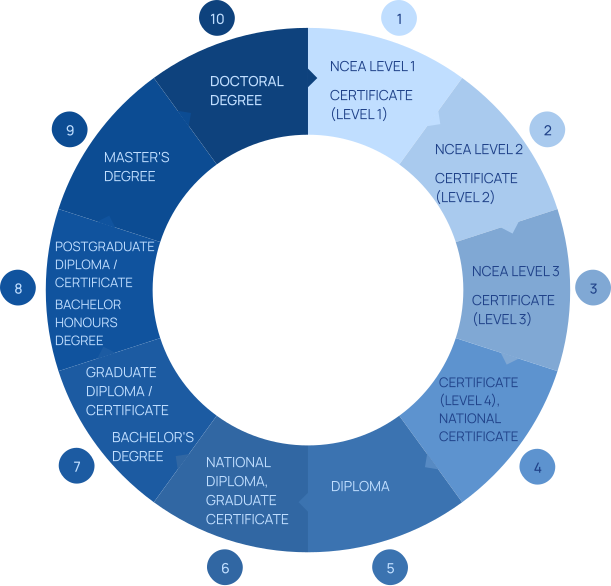
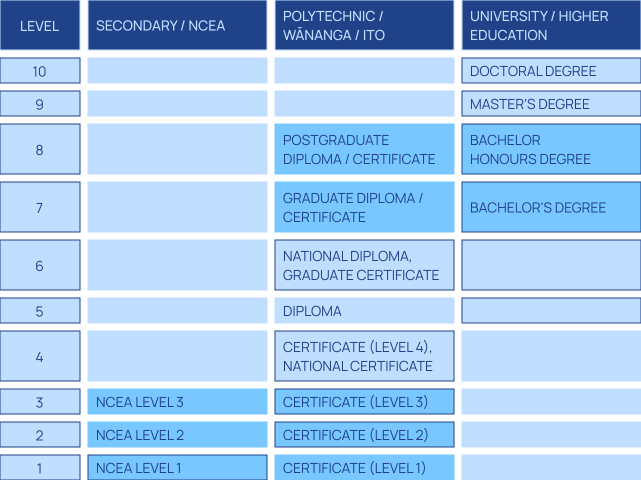
- Bachelor’s Degree
- Master’s Degree
- Doctoral (PhD) Programs

What are the most popular courses in Mauritius?
Some of the most popular and in-demand courses among international and Nepali students are Agriculture & Environmental Studies, Engineering, Health Sciences & Nursing
- Popular and high-demand programs among international and Nepali students include Business, IT, Logistics, Engineering
What is the cost of studying in Mauritius?
- Tuition fees depend on the institution and program:
- Bachelor’s programs: MUR 300,000 – 420,000 per year
- Master’s programs: MUR 350,000 – 500,000 per year
Are scholarships available for Nepali students in Mauritius?
Yes. Both government-funded and university-specific scholarships are available based on academic merit and eligibility.
- Yes. Some institutions offer merit-based scholarships, tuition discounts, and partner-university grants for international students.
How much GPA is required to study in Mauritius?
- Academic requirements are flexible:
- Bachelor’s
- : 2.5 – 3.0 GPA or equivalent
- Master’s
- : 2.8 – 3.0 GPA or higher
Lower GPAs may be considered with relevant work experience or pathway programs.
- Academic requirements are flexible:
What is the cost of living in Mauritius?
- English language requirements depend on the level of study:
- Diploma & Bachelor’s: IELTS 6.0 – 6.5
- Master’s programs: IELTS 6.5 (some programs require 7.0)
- Nursing, Teaching & Health courses: IELTS 7.0 or higher
- Average monthly living cost: MUR 18,000 – 30,000
- Breakdown:
- Accommodation: MUR 8,000 – 15,000
- Food: MUR 6,000 – 9,000
- Transport & utilities: MUR 3,000 – 6,000
How much IELTS is required?
Yes. New Zealand consistently ranks among the safest countries globally, with strong legal protections and student welfare systems.
- English language requirements depend on the program:
- Bachelor’s: IELTS 6.0
- Master’s: IELTS 6.5
How much study gap is accepted for Mauritius?
Yes. International students can work up to 20 hours per week during study periods and full-time during scheduled breaks.
- Mauritius is gap-friendly. Up to 4–6 years is commonly accepted but even longer gaps can be considered with work experience or proper justification
Can Nepali students work while studying?
Eligible graduates can apply for a Post-Study Work Visa, allowing them to gain valuable work experience for up to 3 years, depending on their qualification.Yes, international students may work up to 20 hours per week. A work permit approval is required.
Can I stay in Mauritius after graduation?
The cost of study varies depending on the course and institution:
- Diploma & Bachelor’s programs: AUD 20,000 – 35,000 per year
- Master’s programs: AUD 22,000 – 45,000 per year
- Graduates may apply for:
- Work permits if sponsored by an employer
- Residence permits (eligibility criteria apply)
- Graduates may apply for: