Why study in Australia?
Over 60,000 Nepali students are currently pursuing their education in Australia, making it one of the most trusted and student-friendly destinations.




Globally Recognized Degrees
Scholarship Opportunities
Post-Study Work Opportunities
Career Pathways
Strong Nepali Community


- Academic counselling and course selection
- University shortlisting and academic documents submission
- Statement of Purpose (SOP) and offer application
- Offer acceptance and Confirmation of Enrolment (CoE)
- No Objection Letter (NOC) from the Ministry of Education
- Financial documentation preparation
- Visa application and interview preparation
- Pre-departure briefing and travel guidance
- Confirmation of Enrolment (CoE) from an Australian institution
- Genuine Student (GS) requirement
- Proof of financial capacity
- English language proficiency (IELTS
- Overseas Student Health Cover (OSHC)
- Academic and character requirements
The Australian Qualifications Framework (AQF)
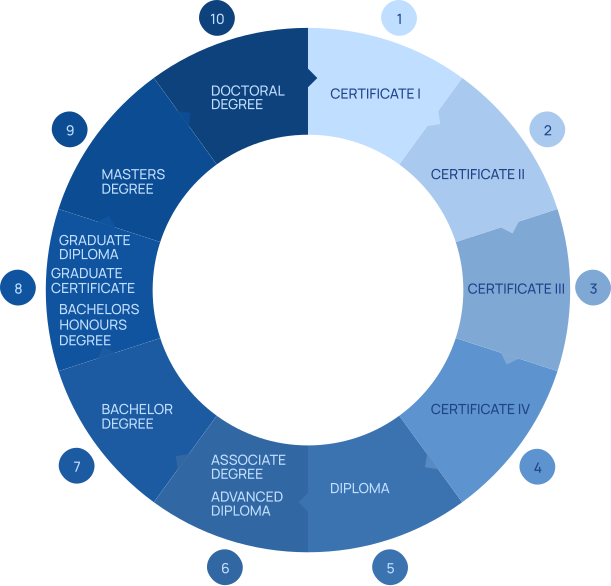
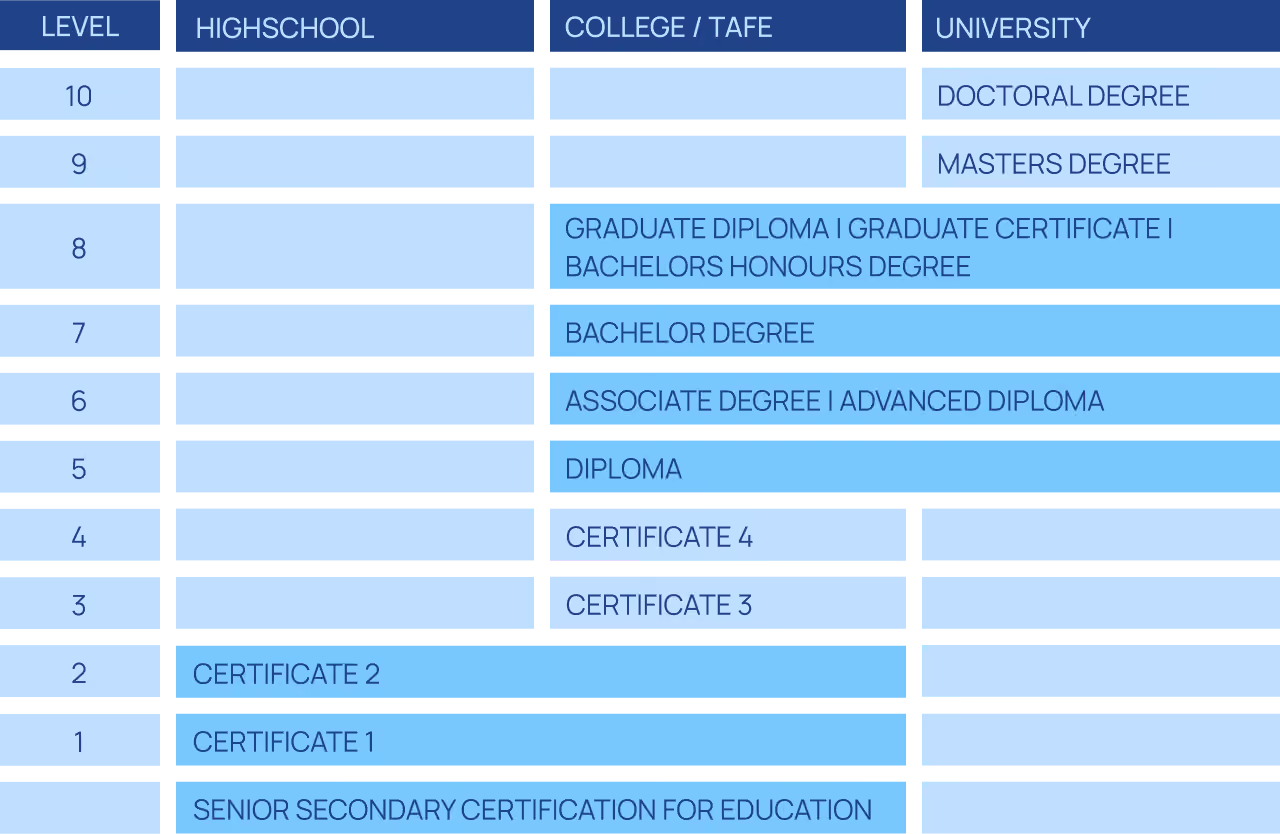
- Doctoral Degree
- Master’s Degree
- Bachelor's Degree

What are the most popular courses to study in Australia?
Some of the most popular and in-demand courses among international and Nepali students are Nursing, IT, Education, Engineering, and Business.
What is the cost of studying in Australia?
The cost of study varies depending on the course and institution:
- Diploma & Bachelor’s programs: AUD 20,000 – 35,000 per year
- Master’s programs: AUD 22,000 – 45,000 per year
Are scholarships available for Nepali students?
Yes. Both government-funded and university-specific scholarships are available based on academic merit and eligibility.
What is the cost of living in Australia?
- Average Monthly Cost: AUD 2,200 – 3,000
- Breakdown:
Accommodation: AUD 900 – 1,600
Food & groceries: AUD 350 – 600
Transport: AUD 120 – 200
Utilities & phone: AUD 150 – 250
Personal expenses: AUD 200 – 400
- Annual Estimate: AUD 26,000 – 36,000
Costs vary significantly by state and city.
How much GPA is required to study in Australia from Nepal?
Minimum academic requirements vary by institution and course. Some universities may accept lower GPAs with relevant work experience or pathway programs. General guidelines are:
- Diploma & Bachelor’s: 2.5 – 3.0 GPA (or equivalent)
- Master’s programs: 2.8 – 3.0 GPA or higher
How much IELTS score is required to study in Australia?
English language requirements depend on the course and institution:
- Diploma & Bachelor’s: IELTS 6.0 – 6.5 (no band less than 5.5–6.0)
- Master’s programs: IELTS 6.5 (some programs require 7.0)
- Nursing, Teaching & Health courses: IELTS 7.0 or higher
How much study gap is accepted for Australia?
Up to 2–3 years is generally acceptable. Longer gaps may be considered with full-time work experience, professional training, or business involvement related to the chosen course. Study gaps are accepted if they are well justified with relevant experience.
Is Australia safe for international students?
Australia is considered one of the safest countries for international students, with strong legal protections and student support services.
Can Nepali students work while studying in Australia?
Yes. International students can work up to 48 hours per fortnight during study periods and full-time during scheduled breaks.
Can I stay in Australia after graduation?
Eligible graduates can apply for the Post-Study Work Visa (Subclass 485), allowing them to gain valuable work experience.
Can I apply for a bachelor's degree with a dependent?
Yes, it is possible to apply for a bachelor’s degree in Australia with a dependent. However, this option is generally restricted to health-related courses.
How many years of Post Study Work VISA will I receive after graduating in Australia?
After graduation, the graduates are eligible to apply for 2-5 years of Post Study Work VISA (PSW VISA) depending on the region they have enrolled in.
How much loan should I take?
The loan varies depending on the course fee.Generally, total loan = 1 year course fee + living expenses + OSHC + travelling cost
Do Australian universities accept all A-Class Nepali banks?
It depends on the university.

.svg)