

Can I Apply to New Zealand After an Australia, UK, Canada or USA Visa Refusal?
Apply to New Zealand After a Previous Visa Refusal
A Visa Refusal Isn't The End
A visa refusal from anywhere, be it Australia, the UK, Canada or the USA, is discouraging, especially after months of preparation and a lot of money spent. Many students decide their study abroad plans are finished and their record is ruined.
This is not the case. A refusal from one country does not automatically bar you from applying to another, but it does change how you must prepare. This guide explains what to expect if you’re planning on applying to New Zealand after receiving a refusal from elsewhere.
What Immigration New Zealand says
Immigration New Zealand states that a decline from another country does not automatically mean your New Zealand application will be declined. Each application is assessed case by case. However, INZ asks about your immigration history, and the reason for your earlier refusal still matters. Officers will look at it alongside the rest of your application and will want to understand if the reason has been addressed.
Why honesty is non-negotiable
INZ application forms ask whether you have ever been refused a visa or entry to any country. You must answer truthfully. Hiding a refusal, or giving a false answer, is far more dangerous than the refusal itself.
Providing false or misleading information can lead to your application being declined, and it can cause serious problems for future applications, not only to New Zealand. Countries also share immigration information with one another, so you should never assume a refusal will go unnoticed.
If you remember one thing from this blog, let it be this: declare it, explain it, and back it up.
First, understand why you were refused
Before you apply anywhere new, find out the actual reason for your earlier refusal. Read your refusal letter or notes carefully. Common reasons for student visa refusals include:
Doubts about genuine intention to study. The officer was not convinced you planned to study rather than use the visa for another purpose.
Weak ties or unclear plans. A poor explanation of why you chose the course, the country and the institution.
Insufficient or unclear funds. Not enough money shown, or an unclear source of funds.
Study gaps or academic concerns. Gaps in education without a clear explanation, or a course that did not match your background.
Documentation problems. Missing, inconsistent or unreliable documents.
Poor interview performance. Answers that did not match your documents or Statement of Purpose.
Your reason determines your next step. A document problem is fixable. A credibility problem takes more careful work. Be honest with yourself about which one applies to you.
Refusal reasons: what may be fixed and what may not
What matters is why you were refused. The table shows the general idea. Your own letter will decide which row applies to you.
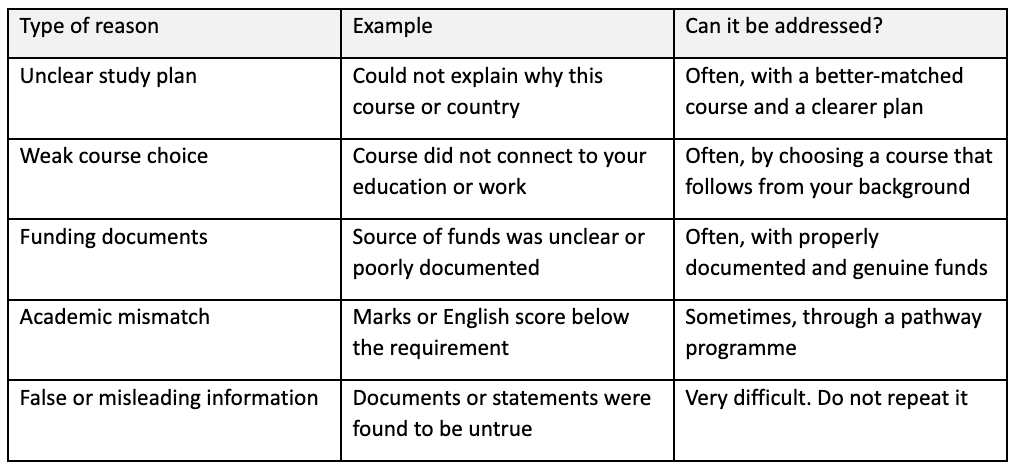
The first four are about preparation and fit. The last is about honesty, and it is the one that is hardest to recover from.
What strengthens a New Zealand application after a refusal
1. Fix the cause, don't just change the country
Applying to a new country with the same weak plan and the same documents is likely to lead to the same result. Show that the issue has actually been addressed, whether that means clearer finances, a better matched course, a stronger explanation of a study gap, or improved English.
2. A course that genuinely fits your background
Choose a programme that connects with your past studies, your work experience and your future plans. A believable study path is one of the strongest signals for a visa officer.
3. A clear and honest Statement of Purpose
Your SOP should explain why you want to study this course, why in New Zealand, why this institution, and what you plan to do afterward. If you have a refusal, it can address it briefly and truthfully, without blaming anyone. Avoid copied templates, which are easy to spot.
4. Clean, consistent financial evidence
Funds must be clear, genuine and well documented, with a traceable source. Current guidance asks applicants to show living-cost funds of NZ$20,000 per year, plus tuition, but INZ updates figures from time to time, so check the official website before applying. Last-minute deposits with no explanation raise red flags.
5. Consistent documents and answers
Your application form, SOP, CV, transcripts, financial records and interview answers must all agree. Many refusals happen because small inconsistencies make a story look unreliable.
6. Updated English and academic evidence
A recent English test result and strong supporting records show you are prepared for study.
Is the type of refusal important?
Yes. A refusal for a fixable, specific reason, such as incomplete documents, is generally easier to address than one that raised serious concerns about credibility or involved misrepresentation. If your earlier refusal involved allegations of false documents or misleading information, the situation is more serious. In that case, speak to a qualified, licensed adviser before applying anywhere.
A note about different countries
A refusal from Australia, the UK, Canada or the USA means each country's immigration rules and decision-making are different. A reason that applied in one country may not apply the same way in New Zealand. But the underlying questions, such as genuine intent, funds and consistency, are common to all of them. This is why understanding your specific reason matters so much.
Common mistakes to avoid
Hiding the refusal. This is the most damaging mistake of all.
Applying quickly to "try again" elsewhere. Take time to fix the problem first.
Believing promises of guaranteed visas. No adviser can guarantee a visa decision. Be cautious of anyone who says otherwise.
Using fake or edited documents. This can lead to long-term consequences.
Reusing the same SOP and documents. If they caused the refusal, they must change.
Picking a course only because admission is easy. Visa officers look at whether your plan is believable.
Ignoring professional advice. A careful review can save time, money and a second refusal.
Be realistic, then get your profile checked
New Zealand is not an easy-visa destination. Strong profile preparation, funding and study logic still matter, and nobody can promise an outcome after a refusal.
If you have been refused elsewhere and are unsure what to do next, meet with our counsellors at NEC. We will go through your refusal, assess your profile, explain your options and help you plan a stronger application.